Best Vegan Breakfast – Aquafaba Omelette Recipe

There are mornings when you crave a hearty breakfast that is light, filling, and packed with flavor. If you’re following a vegan lifestyle or simply looking for an egg-free alternative, this Aquafaba Omelette is a fantastic choice. Made with chickpea flour and whipped aquafaba, it delivers a surprisingly soft and fluffy texture that closely resembles a traditional omelet. Loaded with colorful vegetables and vegan cheese, this recipe is perfect for breakfast, brunch, or even a quick dinner.
Aquafaba Omelette: A Flavorful and Vegan Twist to the Classic Breakfast

aquafaba omelette recipe

Origin

The concept of a Aquafaba Omelette has become increasingly popular as more people embrace plant-based cooking. Instead of eggs, this recipe uses chickpea (garbanzo bean) flour, a protein-rich ingredient that has long been used in Mediterranean, Middle Eastern, and South Asian cuisines. The secret ingredient, aquafaba, is simply the cooking liquid from chickpeas. When whipped, it behaves much like egg whites, creating an airy texture that makes vegan dishes incredibly light and delicious. Combined with black salt (Kala Namak), which naturally has an egg-like flavor, these ingredients create a convincing and satisfying egg-free omelet.

How to Make Aquafaba Omelette (Vegan Omelette)

To make this recipe easier, we will prepare it in three simple parts:

  1. Whipping the aquafaba
  2. Preparing the omelette batter
  3. Cooking and assembling the omelet

Now let’s prepare this delicious vegan breakfast.

Part 1: Preparing the Whipped Aquafaba

Ingredients

  • ½ cup aquafaba (liquid from cooked or canned chickpeas)
Preparation
  1. Pour the aquafaba into a clean mixing bowl.
  2. Using an electric hand mixer or stand mixer, whip the liquid for several minutes until it becomes thick, white, and forms stiff peaks similar to whipped egg whites.
  3. Set the whipped aquafaba aside while preparing the batter.

Part 2: Preparing the Omelet Batter

Ingredients
  • ¼ cup chickpea (garbanzo bean) flour
  • 2–3 tablespoons water
  • ½ teaspoon oil
  • ½ teaspoon black salt (Kala Namak)
  • ¼ teaspoon black pepper
  • A pinch of cayenne pepper (optional)
  • Prepared whipped aquafaba
Cooking Process
  1. Place the chickpea flour in a mixing bowl and remove any lumps if necessary.
  2. Add black salt, black pepper, and cayenne pepper.
  3. Gradually pour in the water while whisking until you obtain a smooth batter.
  4. Mix in the oil and stir until everything is well combined.
  5. Finally, gently fold the whipped aquafaba into the batter. Avoid overmixing so the batter remains light and airy.
  6. Allow the mixture to rest for about 3 to 5 minutes before cooking.

Part 3: Vegetable Filling and Cooking

Ingredients
  • Chopped mushrooms
  • Chopped red bell pepper
  • Chopped green onions
  • Vegan cheese
  • Fresh parsley
  • A little cooking oil
Cooking Process
  1. Heat a non-stick frying pan over medium heat and lightly grease it with oil.
  2. If desired, lightly sauté the mushrooms, bell peppers, and green onions until slightly tender, then set them aside.
  3. Pour the prepared batter into the pan and spread it evenly.
  4. Cook until bubbles begin to appear on the surface and the bottom becomes lightly golden.
  5. Sprinkle vegan cheese over one side of the omelet.
  6. Add the cooked vegetables on top of the cheese.
  7. Fold the omelette carefully in half and continue cooking for another minute or two until the cheese begins to melt and the omelet is fully cooked.
  8. Finish with freshly chopped parsley before serving.

Serving Suggestions

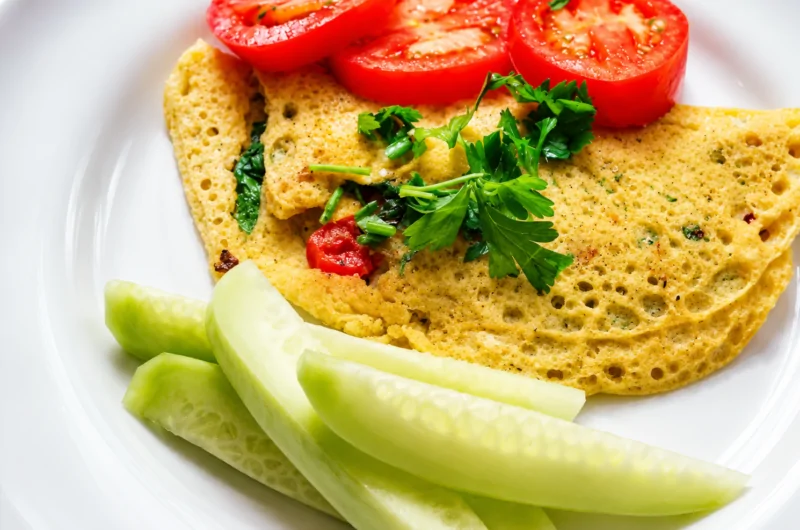
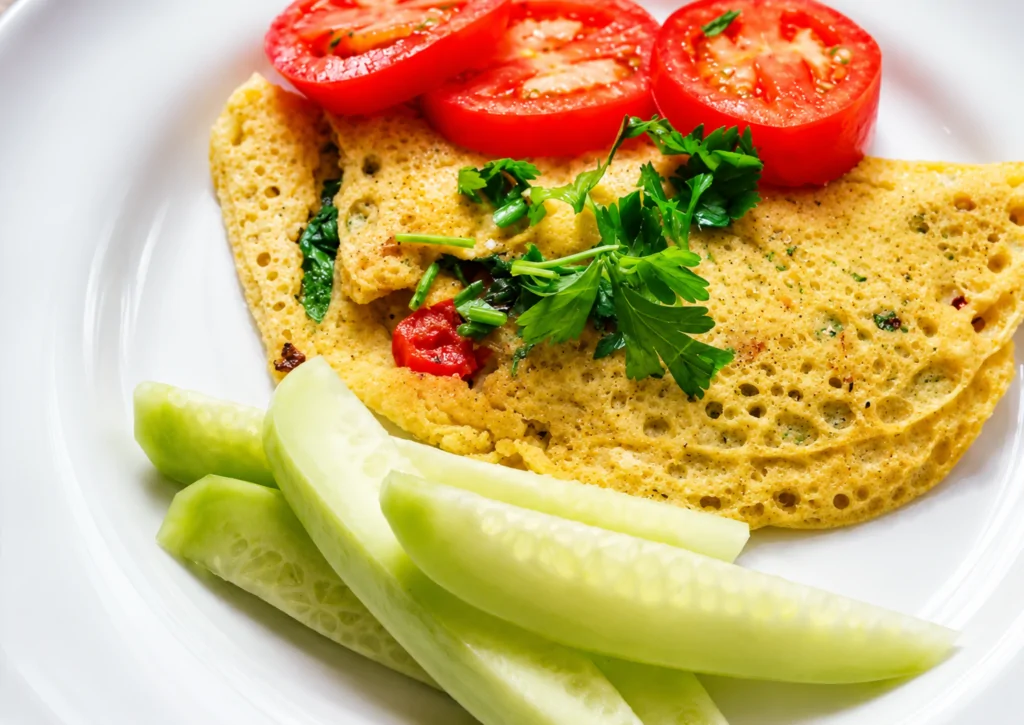
Serve this aquafaba omelette hot with fresh sliced tomatoes, cucumber, avocado, toasted bread, or crispy hash browns. A side of fresh fruit or a smoothie also pairs wonderfully for a complete breakfast. For extra flavor, garnish with additional parsley, black pepper, or a drizzle of your favorite vegan sauce.

Is This Aqufaba Omelettte Healthy?

Yes. This recipe is packed with nutritious plant-based ingredients. Chickpea flour is an excellent source of protein, fiber, iron, and several essential vitamins and minerals. The colorful vegetables provide antioxidants, vitamins A and C, and additional fiber. Aquafaba adds lightness without increasing fat or cholesterol, making this omelet a healthier alternative to traditional egg-based versions. Since the recipe is completely plant-based, it is naturally cholesterol-free while still being filling and satisfying.

Storage Instructions

If you have leftovers, allow the omelet to cool completely before storing it in an airtight container in the refrigerator for up to 2 days.

For the best texture, reheat it gently in a non-stick skillet over low to medium heat rather than using a microwave. The batter itself is best prepared fresh, as whipped aquafaba gradually loses its volume over time.

Conclusion

Making a delicious aquafaba omelette at home is much easier than it may seem. With just a handful of pantry ingredients like chickpea flour, aquafaba, and black salt, you can create a fluffy, protein-rich breakfast that closely resembles a classic egg omelet. Whether you’re vegan, allergic to eggs, or simply interested in trying more plant-based meals, this recipe is a satisfying and nutritious alternative. Pair it with fresh vegetables, toast, or your favorite breakfast sides, and you’ll have a wholesome meal that everyone at the table can enjoy.

FAQs

What is aquafaba, and why is it used in this recipe?

Aquafaba is the liquid left after cooking chickpeas or the liquid found in canned chickpeas. When whipped, it traps air just like egg whites, giving the vegan omelet its light, fluffy texture.

Can I make this aquafaba omelette without aquafaba?

Yes, but the texture will be much denser. Aquafaba is what makes the omelet soft and airy. Without it, the omelet will resemble a chickpea pancake rather than a traditional omelet.

What is black salt (Kala Namak), and can I substitute it?

Black salt is a natural mineral salt with a sulfur-like aroma that closely mimics the taste of eggs. While regular salt can be used as a substitute, the omelet will lose much of its authentic egg-like flavor.

Can I prepare the batter in advance?

You can prepare the chickpea flour batter several hours ahead and refrigerate it. However, the aquafaba should be whipped and folded into the batter immediately before cooking to maintain maximum volume and fluffiness.

What vegetables can I add to this aquafaba omelette?

This recipe is highly customizable. Besides mushrooms, bell peppers, and green onions, you can add spinach, tomatoes, onions, zucchini, broccoli, olives, corn, or even cooked vegan sausage for extra flavor and nutrition.

Recipe

Best Vegan Aquafaba Omelette Recipe

Recipe by Kamran HaiderCourse: BreakfastCuisine: VeganDifficulty: Easy
Servings

1

omelette
Prep time

15

minutes
Cooking time

15

minutes
Calories

260

kcal

To make this recipe easier, we will prepare it in three simple parts:
1. Whipping the aquafaba
2. Preparing the omelette batter
3. Cooking and assembling the omelet

Ingredients

  • Part 1:

  • ½ cup aquafaba (liquid from cooked or canned chickpeas)

  • Part 2:

  • ¼ cup chickpea (garbanzo bean) flour

  • 2–3 tablespoons water

  • ½ teaspoon oil

  • ½ teaspoon black salt (Kala Namak)

  • ¼ teaspoon black pepper

  • A pinch of cayenne pepper (optional)

  • Prepared whipped aquafaba

  • Part 3:

  • Chopped mushrooms

  • Chopped red bell pepper

  • Chopped green onions

  • Vegan cheese

  • Fresh parsley

  • A little cooking oil

Directions

  • Part 1: Preparing the Whipped Aquafaba
  • Pour the aquafaba into a clean mixing bowl.
  • Using an electric hand mixer or stand mixer, whip the liquid for several minutes until it becomes thick, white, and forms stiff peaks similar to whipped egg whites.
  • Set the whipped aquafaba aside while preparing the batter.
  • Part 2: Preparing the Omelet Batter
  • Place the chickpea flour in a mixing bowl and remove any lumps if necessary.
  • Add black salt, black pepper, and cayenne pepper.
  • Gradually pour in the water while whisking until you obtain a smooth batter.
  • Mix in the oil and stir until everything is well combined.
  • Finally, gently fold the whipped aquafaba into the batter. Avoid overmixing so the batter remains light and airy.
  • Allow the mixture to rest for about 3 to 5 minutes before cooking.
  • Part 3: Vegetable Filling and Cooking
  • Heat a non-stick frying pan over medium heat and lightly grease it with oil.
  • If desired, lightly sauté the mushrooms, bell peppers, and green onions until slightly tender, then set them aside.
  • Pour the prepared batter into the pan and spread it evenly.
  • Cook until bubbles begin to appear on the surface and the bottom becomes lightly golden.
  • Sprinkle vegan cheese over one side of the omelet.
  • Add the cooked vegetables on top of the cheese.
  • Fold the omelette carefully in half and continue cooking for another minute or two until the cheese begins to melt and the omelet is fully cooked.
  • Finish with freshly chopped parsley before serving.

Notes

  • The two most important ingredients in this recipe are whipped aquafaba and black salt (Kala Namak). Aquafaba creates the light and fluffy texture that resembles beaten eggs, while black salt contributes the distinctive sulfur-like aroma associated with traditional omelets. Avoid overmixing after folding in the aquafaba, as doing so can deflate the air bubbles and reduce the omelet’s fluffiness. For the best results, always cook the batter over medium to low heat in a quality non-stick pan.

Leave a Reply

Your email address will not be published. Required fields are marked *